
3c认证
Chinese cities turn to AI forecasts, smart radar networks to combat extreme weather_我的网站

A |
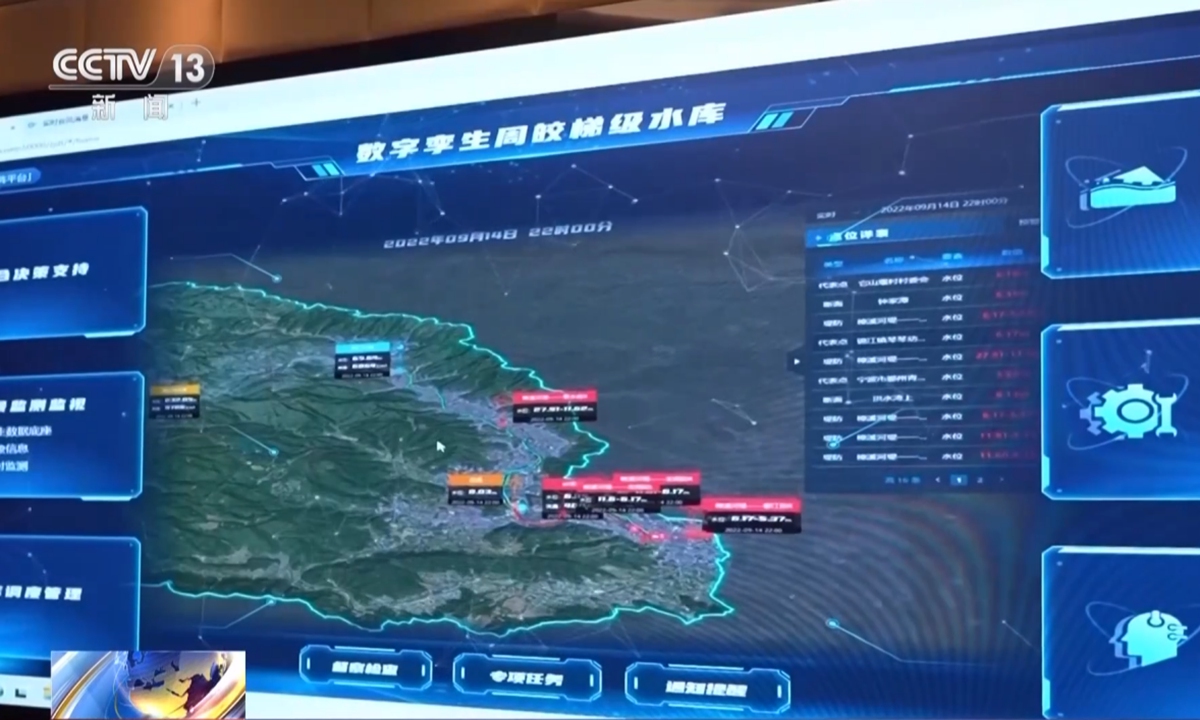
From AI-powered flood forecasting and digital twins to smart reservoir management, phased-array radar networks and ground-based remote sensing systems, a new generation of high-tech equipment and systems is helping Chinese cities sharpen weather forecasts, improve flood control and make faster, more precise decisions to stay one step ahead of extreme weather.
In Ningbo, East China's Zhejiang Province, where water resources are relatively limited, the calculation of reservoir water release is tricky. If you release too much, the city could find itself short of water after the storm, however if you release too little, the reservoir may struggle to accommodate the floodwater brought by torrential rain.
Finding that balance is now increasingly a job for AI.
"The balance point has to be continuously analyzed and calculated by the dispatching software," Jiang Yutian, a department director at the Ningbo Water Conservancy & Hydropower Planning and Design Institute Co., Ltd., said, according to CCTV News.
At the heart of the system is an AI forecasting model that dramatically speeds up calculations.
For the Yongjiang River basin, running a complete flood-control scenario used to take five to 10 minutes. The new model can complete the calculation in just five to 10 seconds, cutting the time required to around one-sixtieth of the previous level.
Using rainfall forecasts and changing water levels, the model refreshes its recommendations every five minutes, calculating how much water should be released, how much can be stored later and how much reservoir capacity will remain when the flood peak arrives. Dispatchers can then adjust water releases in real time, per CCTV's report.
AI is not working alone. A digital-twin dispatching platform allows reservoirs to be managed together rather than individually. Across Ningbo's 16 major medium- and large-sized flood-control reservoirs, operators can see in real time which are approaching capacity and which still have room to take more water.
Hundreds of kilometers inland, another city is using a different technological set of technologies to tackle the same challenge of weather uncertainty.
Nanyang in Central China's Henan Province, which lies in a basin surrounded by mountains on three sides, has experienced widespread heavy rainfall since Monday under the influence of Typhoon Dolphin. Its geography leaves the city exposed to a combination of risks, including urban waterlogging, flooding in small and medium-sized rivers and inundation of farmland.
To track storms more precisely, the Nanyang meteorological authority has deployed a network of four newly installed X-band dual-polarization phased-array radars, together with an S-band dual-polarization radar and a ground-based vertical remote sensing system, according to the China Meteorological Administration.
The equipment allows forecasters to closely track the development and movement of convective clouds and identify areas at risk of intense rainfall earlier.
The city's meteorological authority has also integrated weather data with a citywide video monitoring network covering vulnerable locations such as underpasses, tunnels, river embankments and mountainous villages. This allows forecasters to compare what instruments are detecting with what is actually happening on the ground.
Together, the approaches in Ningbo and Nanyang offer a glimpse of how China's weather-disaster prevention efforts are becoming increasingly digital and intelligent, using faster calculations, denser observations and real-time data to bring greater certainty to decisions made in the face of uncertain weather.
Global Times
。
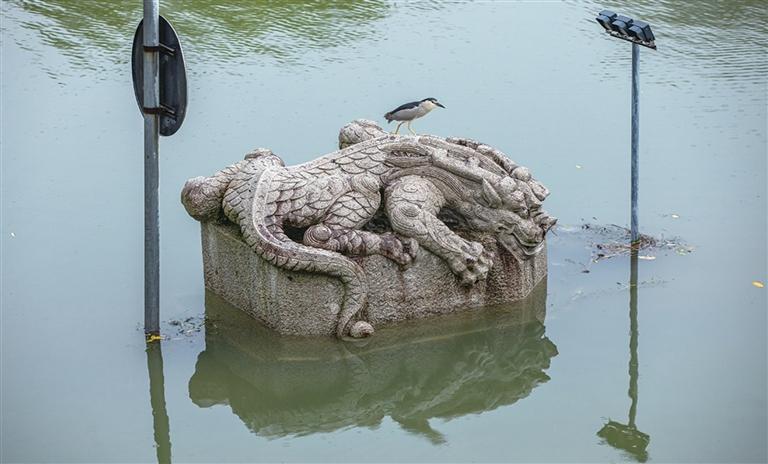 昨天傍晚,一只夜鹭站在趴蝮身上。记者 陈中秋 摄
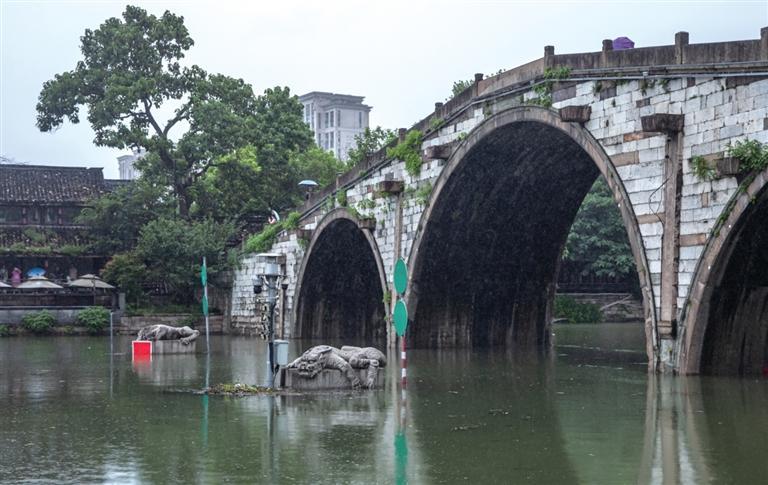 昨天傍晚,镇水神兽趴蝮,运河水已淹过石礅底座。记者 陈中秋 摄台风“白海豚”给杭州带来大风和强降水,前天有网友发帖:路过拱宸桥看到运河涨水,四只神兽快被淹了。
B | 昨天上午10点,记者来到拱宸桥。

C | 运河两岸的游步道拉起安全警戒线,地势低的地方被水没过,一家店的员工正往外舀水。桥南桥北,左右各有两只神兽,眼睛注视着水面。河水涨了,水面没过它们的脚和尾巴,远远看去,似乎一低头就能喝到水。到京杭大运河拱宸桥的游客,总要被水中趴卧的四只神兽吸引,拍照打卡。

D | 一个小朋友指着神兽问,这是什么?快被水淹了,会不会被冲走呀?孩子妈妈解释,它们是镇水神兽,洪水怕它们,不敢兴风作浪。这不是它们离水面最近的一次。浙江省水利厅8月11日最新发布水文简报:拱宸桥当前水位2.86米,警戒水位2.66米,保证水位3.16米,超保超警幅度0.2米。2013年10月6日,受台风“菲特”影响,运河水大涨,有人拍到拱宸桥下的趴蝮(又名蚣蝮gōng fù)如一条鳄鱼浮在水面。龙王第六个儿子成镇水神兽拱宸桥下这四只神兽,民间称趴蝮(bā xià),面目威严,兽首獠牙微露,浑身鳞甲虬结,四肢盘曲遒劲,石块刻出饱满的肌肉线条,筋骨隆起,仿佛蛰伏水中的上古异兽,蓄势欲动。明代杨慎《升庵外集》记载:“俗传龙生九子,不成龙,各有所好……六曰蚣蝮,性好水,故立于桥柱。”早在宋元年间,江南运河、古桥桥墩就有人雕刻镇水神兽,用来防撞桥墩、祈求防洪。传说龙生九子,各个不同,有镇水、镇火避雷、钟鼓香火、兵器杀伐……单独去识记,名字就有些复杂,像“赑屃”“蚣蝮”“螭吻”“蒲牢”……老底子杭州人章先生告诉记者,相传很久以前,蚣蝮因为触犯天条,被贬下凡,压在巨大沉重的龟壳下看守运河一千年,千年后终于脱离龟壳,重获自由。千年来趴蝮护河有功,人们为了表彰它,就照着它的模样雕成石像,摆在河边的石墩上,用来镇住河妖,防止洪水侵袭,这就是所谓“趴蝮镇水”。守护拱宸桥21年多次被货船撞到落水这四只趴蝮2005年安装落成。除了“镇水”的寓意,还有美观、防船撞桥、监测水位的实际功能。

E | 运河水运繁忙,南来北往的船只过桥屡有撞击剐蹭。2012年快报热线新闻曾报道:读者杜先生带着儿子在拱宸桥上散步,突然感觉一抖,往下一看,一艘装满石子的货船撞到了桥墩边的一只神兽趴蝮。还有人拍到趴蝮被撞落水瞬间。2005年以来,趴蝮至少4次被撞落水。2013年有读者拍到,四只神兽只剩一只坚守。趴蝮的每一次被撞,都牵动杭州人的心,媒体多有报道。撞击、落水、打捞、修复、安装……这些神兽存在的意义,不止停留在神话里镇水的虚指,更结结实实保护着拱宸桥这座古桥,试想,两三百吨的运沙船如果直接撞到桥墩,那是多么不堪承受的冲击。自从安装上防撞墩和趴蝮后,拱宸桥被撞的次数少多了,代价是趴蝮几次被撞得歪斜,甚至掉进河里。2009年5月5日,一只趴蝮再次被撞,当天快报记者将情况告知杭州市运河集团,接电话的工作人员听后第一句话是:“啊,又被撞啦!”然后说,马上派人到现场查看。

F | 京杭大运河起于北京终于杭州。

G | 拱宸桥是京杭大运河上的最后一座桥,而北京的后门桥是京杭大运河上的第一座桥,后门桥的四角也有四只趴蝮。余光中曾为拱宸桥和趴蝮写诗大运河河水悠悠,发生在桥边的故事也很动人。浙派古琴泰斗高醒华和著名台湾诗人余光中是新中国成立前金陵大学同学,同级不同系,相逢不相识。

H | 高老深以为憾,命运齿轮转动,两人在64年后,于2012年在杭州拱宸桥边相聚。高醒华曾作文记录了这次际遇,“那是一个深秋的夜晚,恰逢重阳,拱宸桥边灯火明灭,舒羽咖啡馆里春意盎然。舒羽和诗人们在这里为余光中85岁诞辰举办《登高能赋》庆祝会……”那次聚会后,余光中写了首长诗——《拱宸桥诗会》。咖啡雅座,雕花的亭阁斜对着拱宸大桥,两侧拱起了陡坡,桥墩在中流雄踞着趴蝮,龙生第六遥望若狮,朦胧得惊人桥影在窗格子外,那运河水声滔滔犹似一千多年前……当此情景,拱宸桥、趴蝮在诗人的意象里,变成了文化的符号,是情感的维系,是怀念,是乡愁。
Current article:http://zn81s37.foujiongwenruapoumeizhan.buzz/5e7f/20260826/4292.html
Published on:11:06:39